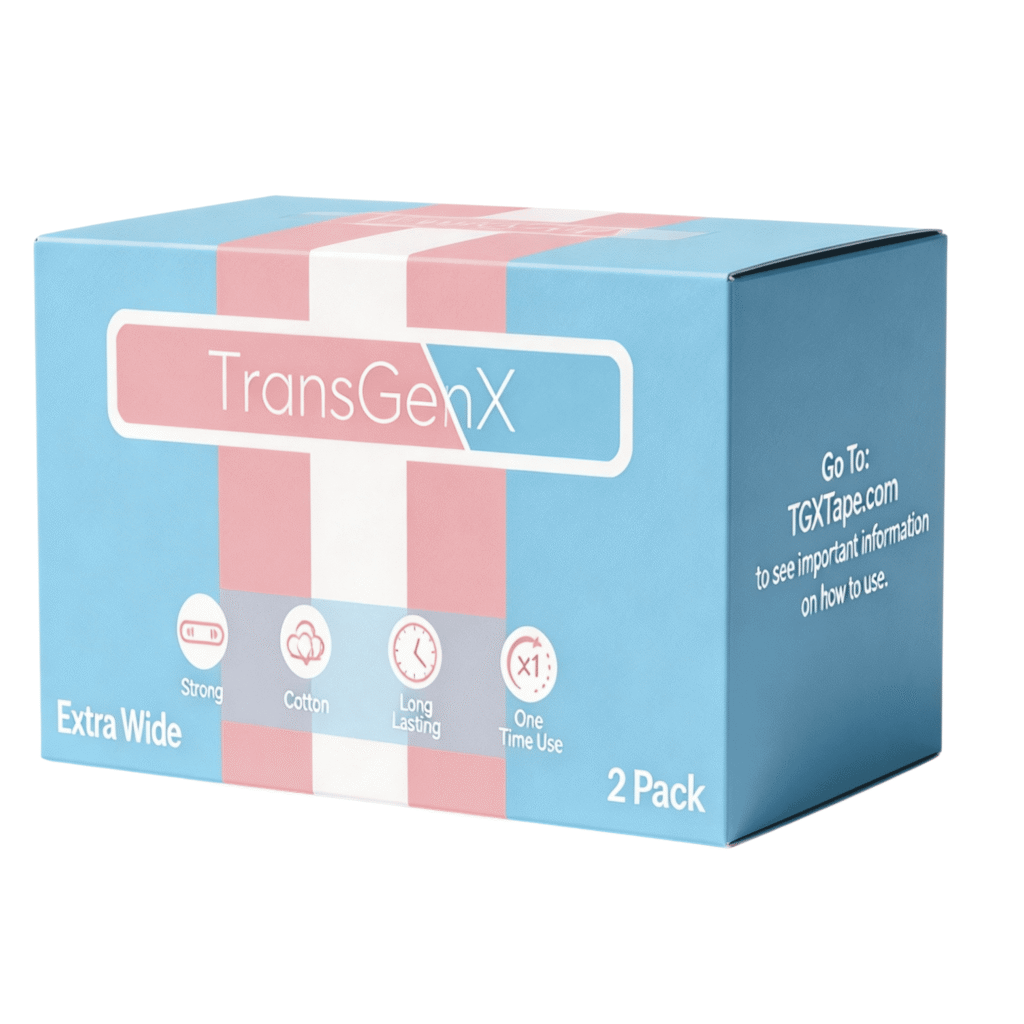
A cut-to-fit chest binding tape such as TransGenX, applied in strips that do not encircle the whole torso, generally leaves more of the back and rib cage free than a traditional compression binder. For many people, that means more room to move and to take a full breath — if the tape is applied carefully and stays comfortable. We do not have a lab test that ranks every chest tape on the market, so we cannot honestly claim that TransGenX is “the most flexible tape” in a head-to-head trial.
If movement during exercise is your main question, also read whether TransGenX tape can stay on during workouts.
Why tape and binders feel different when you move
A typical FTM or transmasculine binder is worn like a tight undershirt. It compresses the chest and also covers much of the upper torso. TransGenX is an adhesive tape you cut and stick to the skin to hold tissue in place. It does not, by itself, wrap around the entire rib cage the way a garment does.
Fenway Health’s 2025 binding guide says you should always be able to take a deep breath without pain or difficulty, and that your arms should have their full range of motion while binding. Those two checks are a practical way to judge whether any method — tape or a binder — is leaving you enough room to move.
| Option | How it holds the chest | What that often means for movement |
|---|---|---|
| TransGenX cut-to-fit tape | Adhesive strips on the skin | Back and much of the rib cage can stay uncovered; movement depends on placement, tension, and comfort |
| Traditional chest binder | Compression garment around the torso | More even compression for some people; can feel more restrictive during deep breathing or reaching |
| Sports kinesiology tape used on skin | Also applied as strips | Mechanically similar to other skin tapes; brands differ in stretch and adhesive; this site does not rank them |
When a binder may still be the better choice
Some people get a more predictable shape from a properly sized binder, or they simply find binders faster to put on. If tape lifts during activity, irritates your skin, or does not feel secure, a binder or a different method may suit you better. Neither approach is automatically safer or more effective for every body.
Safety while you move
Fenway says to stop immediately if breathing becomes difficult, and not to use ace bandages, plastic wrap, or tape that is not intended for skin. Skin irritation is the most common side effect it lists for binding tape. Test a small patch first, do not apply to broken skin, and take the tape off if it hurts, peels into a sharp edge, or changes how you breathe.
Frequently asked questions
Which chest tape allows the most movement?
Tapes that are cut and applied as strips, rather than wrapped around the chest as a continuous band, are the ones that typically allow the most movement, because they do not function like a compression garment. TransGenX is designed that way. We cannot publish a ranked list of competing tapes without testing them.
Will TransGenX stay on while I move?
The product is sold as an adhesive chest tape, and many people use it during ordinary daily movement. Sweat, heat, oil on the skin, and how the ends are applied all affect hold. See the workout page for a fuller discussion. There is no guarantee it will stay put in every activity.
Can I wrap the tape all the way around my chest?
TransGenX is sold as cut-to-fit strips, not as a wrap-around bandage. Fenway says you must always be able to breathe deeply without pain. Do not apply any tape in a way that tightens the whole rib cage or makes it hard to breathe.
Source: Fenway Health, “Binding” (2025). This page is general information, not medical advice. See the medical disclaimer.
Updated 17 November 2026.