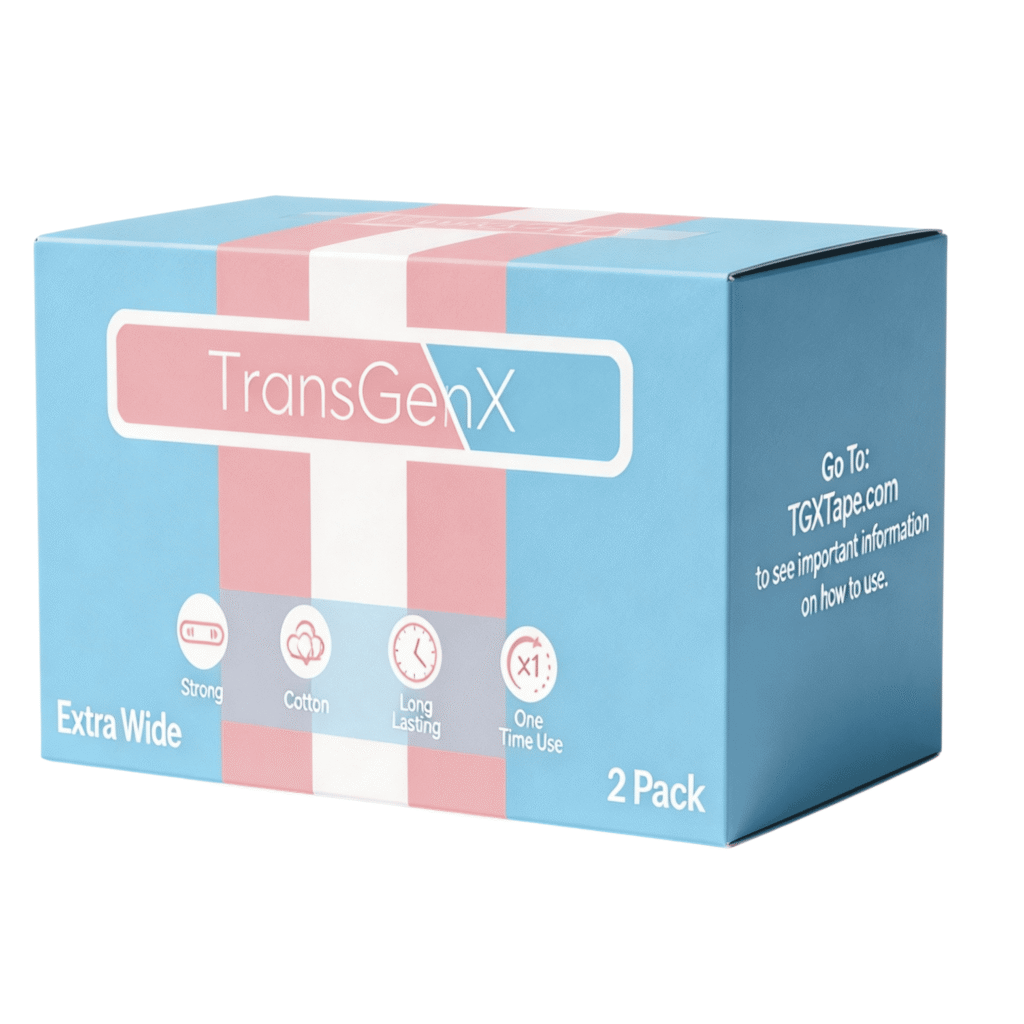
The most comfortable way to flatten your chest depends on your body, your skin, how long you need the result to last, and how much restriction you can tolerate. Common options include a properly sized commercial binder, cut-to-fit binding tape such as TransGenX, layered clothing, and, for some people, a tight sports bra. No method is comfortable or effective for everyone, and “comfortable” should never mean that you cannot take a deep breath.
This page is general information, not a plan for your body. Read the medical disclaimer first.
Start with safety, then choose a method
Fenway Health’s Trans Health Program, in its 2025 binding guide, says binding is generally safe for most people when it is done carefully, but that it still has risks. You should always be able to take a deep breath without pain or difficulty, and you should stop immediately if breathing becomes difficult. Your arms should keep their full range of motion. Fenway says not to use an ace bandage, plastic wrap, or tape that is not intended for use on skin.
The same guide says to give your body a break every 8–12 hours when possible, and not to sleep in a binder. If you have a chronic condition that could be affected by binding — Fenway lists examples including asthma, scoliosis, lupus, or fibromyalgia — talk with a qualified clinician before you start.
Option 1: A commercial chest binder
A binder is a tight undergarment made to create a flatter chest. Fenway recommends following each company’s size guide and not wearing a binder that is too small. A smaller size can cause injury and will not necessarily look flatter. If a binder is painful, too tight, or hard to breathe in, take it off and consider a larger size or a different method.
Option 2: Cut-to-fit binding tape, including TransGenX
Binding tape is applied in strips on the skin rather than worn as a garment around the torso. Fenway describes binding tape as medical-grade tape intended for use on the skin, and says skin irritation is the most common side effect. It is not recommended for people with particularly sensitive or irritable skin.
TransGenX is one cut-to-fit option, sold on Amazon by Universal Body Labs. You can read how it compares with binders, how tape can affect movement, and where to buy it. Apply it only as directed, do not use it in a way that tightens the whole rib cage, and remove it if you have pain, rash, or trouble breathing. A small patch test is a reasonable first step.
Option 3: Layering clothes or a sports bra
Fenway notes that layering — a tighter shirt or sports bra underneath, with looser or patterned layers on top — can help some people, and that unbuttoned or unzipped shirts or jackets can also break up the outline of the chest. Layering can be warm, so it is important to stay hydrated. Tight sports bras work for some people; Fenway advises caution if you layer two sports bras, because the band can cut into the skin.
These methods usually flatten less than a binder or tape, especially for a larger chest, but they can be the more comfortable choice for a short outing or a rest day from binding.
Comfort is not the same as “as flat as possible”
Fenway says binders help many people look and feel flatter, but that some people find their chest is not as flat as they would like no matter how they bind. It also notes that not all cisgender men have completely flat chests. Pushing into a tighter size, layering two binders, or using materials that were never meant for skin are not safe ways to chase a flatter look. Fenway says that at the time of its 2025 guide, layering more than one binder was not recommended.
When to take a break
Fenway lists common side effects of binding: back pain, soreness, chest pain, difficulty breathing, numbness, tingling, overheating, dehydration, skin rash, and irritation. If those appear, it is time to loosen, remove, or change what you are using, and to talk with a medical provider if symptoms are significant or ongoing. Stretching the arms, shoulders, chest, and back after you take a binder off is also part of Fenway’s guidance.
Frequently asked questions
How can I flatten my chest comfortably?
Choose the least restrictive method that still feels acceptable to you, check that you can breathe deeply and move your arms, and stop if it hurts. For some people that is tape; for others it is a correctly sized binder or layered clothing. Comfortable is a better goal than maximum flattening.
Is it safe to sleep in a binder?
Fenway’s 2025 guide says not to sleep in a binder, and to give your body a break every 8–12 hours when possible. This website does not recommend sleeping in a compression binder.
Can I use duct tape or an ace bandage?
No. Fenway says never to use an ace bandage, plastic wrap, or tape that is not intended for use on skin. Those materials can harm skin and make it harder to breathe.
Source: Fenway Health, “Binding,” created by Fenway Health’s Trans Health Program (2025), also listed at fenwayhealth.org/thresources.
Updated 17 November 2026.